

Pre-Engineered Buildings Market to Reach US$37.9B by 2030, Growing at 12.6% CAGR on Fast-Track Construction Demand
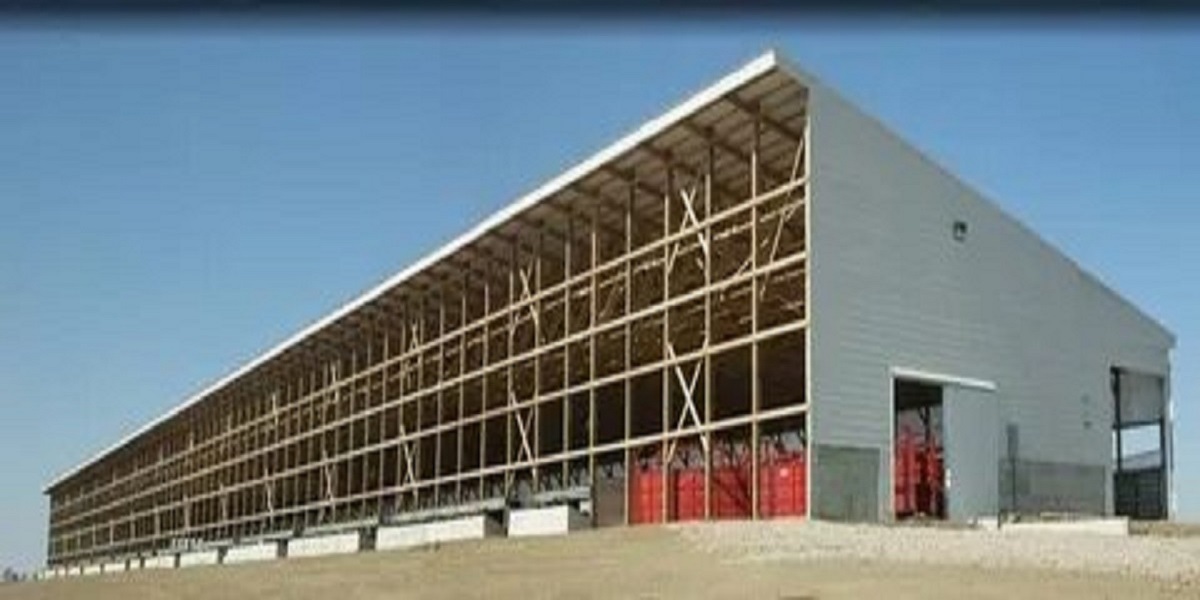
Pre-Engineered Buildings Market
Pre-Engineered Buildings Market Valued at US$14.6B in 2022, Asia-Pacific Leads with 60.3% Share; Key Players Include Tata BlueScope, Kirby, Zamil Steel
The pre-engineered buildings market is growing as demand rises for faster, cost-effective, and flexible construction solutions”
LEANDER, TX, UNITED STATES, December 18, 2025 /EINPresswire.com/ -- According to DataM Intelligence, the Global Pre-Engineered Buildings Market reached US$ 14.6 billion in 2022 and is projected to grow significantly to US$ 37.9 billion by 2030, expanding at a CAGR of 12.6% during the forecast period 2024–2031. Market growth is driven by rising demand for fast-track and cost-efficient construction solutions, rapid industrialization and urbanization, and the growing need for flexible building designs across industrial, commercial, and infrastructure applications.— DataM Intelligence
Pre-engineered buildings are increasingly favored over traditional construction methods due to advantages such as reduced construction time, cost-effectiveness, design flexibility, durability, energy efficiency, and ease of customization. Emerging economies, particularly in Asia-Pacific and the Middle East, are witnessing strong adoption supported by large-scale infrastructure projects and industrial expansion. Asia-Pacific is expected to account for more than 60.3% of the global market during the forecast period, with India and China contributing nearly two-thirds of the regional demand, positioning the region as the primary growth engine for the global pre-engineered buildings market.
Download your exclusive sample report today: (corporate email gets priority access): https://www.datamintelligence.com/download-sample/pre-engineered-buildings-market
Key Highlights from the Report:
The pre-engineered buildings market is expanding steadily as industries and commercial sectors adopt cost-effective, fast-installation structural solutions compared to traditional construction methods.
Demand is driven by rapid industrialization, infrastructure growth, urbanization, and the need for flexible, scalable building systems across manufacturing, warehousing, retail, and institutional applications.
Pre-engineered buildings offer benefits such as reduced construction time, lower material waste, improved energy efficiency, and simplified design-to-delivery processes, supporting sustainability and operational efficiency.
The market is segmented across building types (industrial, commercial, institutional), end-use sectors, and material types including steel and allied structural components tailored for durability and performance.
Growth is supported by increasing investment in logistics and distribution infrastructure, rising demand for modular construction, and technological advancements in structural design and building information modeling (BIM).
Key Segments
By Structure
Single-story structures hold a significant share as they offer cost efficiency, easier installation, and faster construction timelines, making them suitable for warehouses, distribution centers, manufacturing units, and logistics facilities. Their design flexibility and ease of maintenance further support widespread adoption. Multi-story structures are gaining steady traction, particularly in urban and space-constrained regions, as they maximize land utilization and support vertical expansion for commercial and industrial operations.
By Application
Commercial applications dominate the market, driven by rising demand for retail spaces, office complexes, data centers, and storage facilities that require scalable and time-efficient construction solutions. Industrial applications continue to expand steadily as manufacturers, energy companies, and logistics operators adopt these structures to support production facilities, workshops, and heavy-duty operational environments.
Buy Now & Unlock 360° Market Intelligence: https://www.datamintelligence.com/buy-now-page?report=pre-engineered-buildings-market
Key Players
Tata BlueScope Steel | Era Infra | Everest Industries | Interarch Building Products | Jindal Prefab | Kirby Building Systems | Lloyd Insulations | PEB Steel Buildings | Tiger Steel Engineering | Zamil Steel
Key Highlights
Tata BlueScope Steel – Holds a share of 18.9%: Market leader in pre-engineered and metal building solutions, offering high-quality coated steel products and sustainable construction systems for industrial and commercial applications.
Kirby Building Systems – Holds a share of 16.4%: Strong global presence in pre-engineered buildings (PEBs) with advanced design, fabrication, and turnkey construction capabilities.
Zamil Steel – Holds a share of 14.7%: Provides comprehensive steel building solutions for industrial, infrastructure, and commercial projects with a strong footprint in the Middle East and Asia.
Everest Industries – Holds a share of 11.2%: Diversified building solutions provider specializing in roofing, cladding, and prefabricated structures for industrial and residential markets.
Interarch Building Products – Holds a share of 9.6%: Focuses on customized pre-engineered buildings and metal roofing systems for warehouses, factories, and logistics hubs.
Jindal Prefab – Holds a share of 8.1%: Offers modular and prefabricated building solutions with emphasis on speed of construction and cost efficiency.
PEB Steel Buildings – Holds a share of 7.4%: Delivers design-to-build pre-engineered steel structures with strong engineering and fabrication expertise.
Lloyd Insulations – Holds a share of 6.2%: Specializes in insulation, cladding, and turnkey solutions for industrial buildings and energy infrastructure.
Tiger Steel Engineering – Holds a share of 4.3%: Provides steel fabrication and PEB solutions for mid-scale industrial and commercial projects.
Era Infra – Holds a share of 3.2%: Engages in infrastructure development and steel-based construction projects with regional market focus.
Regional Insights
• North America – 40% driven by "high consumer awareness of preventive healthcare, widespread adoption of self-testing for infectious diseases and chronic conditions, strong distribution through pharmacies and online channels, and supportive regulatory frameworks facilitating over-the-counter test approvals."
• Europe – 27% supported by "growing demand for convenient and rapid diagnostic tools, increasing focus on preventive care and early detection, expanding telehealth integration, and widespread availability of diverse at-home test options across major countries."
• Asia-Pacific – 23% fueled by "rapid expansion of healthcare access, rising health awareness, increasing adoption of digital health tools, and growing availability of cost-effective at-home testing kits for various conditions in populous markets."
• Latin America – 6% driven by "rising awareness of early disease detection, improving availability of at-home kits through pharmacies and online platforms, and growing emphasis on accessible healthcare solutions."
• Middle East & Africa – 4% supported by "increasing healthcare modernization initiatives, expanding consumer access to rapid test kits, and gradual adoption of self-testing tools for infectious diseases and wellness monitoring."
Get Customization in the report as per your requirements: https://www.datamintelligence.com/customize/pre-engineered-buildings-market
Key Developments
November 2025: Major PEB manufacturers announced expanded product lines that integrate modular design with sustainable materials, enabling faster construction timelines and improved energy efficiency.
October 2025: A leading construction technology provider introduced advanced design software for PEB projects, featuring AI-driven structural optimization and real-time cost estimation to streamline planning and reduce errors.
September 2025: Governments and municipal authorities in several regions updated building codes to encourage adoption of pre-engineered structures for industrial and commercial facilities, recognizing their cost and time advantages.
August 2025: Strategic collaborations emerged between PEB suppliers and renewable energy firms to offer turnkey building solutions that incorporate solar ready roofing and integrated energy management systems.
July 2025: Construction companies increasingly adopted hybrid steel-and-composite PEB systems to improve structural performance, especially for large-span industrial facilities and warehouse applications.
June 2025: Investment in digital fabrication and automated manufacturing technologies grew among PEB fabricators, enhancing precision, reducing waste, and supporting mass customization of building components.
Frequently Asked Questions (FAQs):
1. How big is the global pre-engineered buildings market in terms of growth forecast?
The global pre-engineered buildings market was valued at around US$ 14.6 billion and is expected to grow significantly during the forecast period.
2. What is the projected CAGR for the pre-engineered buildings market?
The market is projected to grow at a CAGR of approximately 12.6% during 2024–2031.
3. Which region currently dominates the pre-engineered buildings market?
The Asia-Pacific region dominates the market, driven by rapid urbanization, industrial expansion, and increasing infrastructure development.
Conclusion:
The global pre-engineered buildings market is positioned for continued growth as demand for faster, cost-effective, and sustainable construction solutions increases across industries such as manufacturing, warehousing, retail, and logistics. Pre-engineered buildings offer advantages including reduced construction time, greater design flexibility, lower labor costs, and improved material efficiency, making them an attractive choice for companies and developers focused on operational efficiency and scalability.
Although challenges such as fluctuating raw material prices and the need for specialized design expertise persist, advancements in manufacturing processes, enhanced steel fabrication technologies, and growing awareness of long-term cost benefits are driving wider adoption. Overall, pre-engineered buildings are expected to play a significant role in modern construction, supporting infrastructure growth and offering practical building solutions across global markets.
Related Reports:
1. self-leveling concrete (SLC) market
2. Bridge Expansion Joints Market
Sai Kiran
DataM Intelligence 4market Research LLP
+1 877-441-4866
email us here
Visit us on social media:
LinkedIn
YouTube
X
Legal Disclaimer:
EIN Presswire provides this news content "as is" without warranty of any kind. We do not accept any responsibility or liability for the accuracy, content, images, videos, licenses, completeness, legality, or reliability of the information contained in this article. If you have any complaints or copyright issues related to this article, kindly contact the author above.
